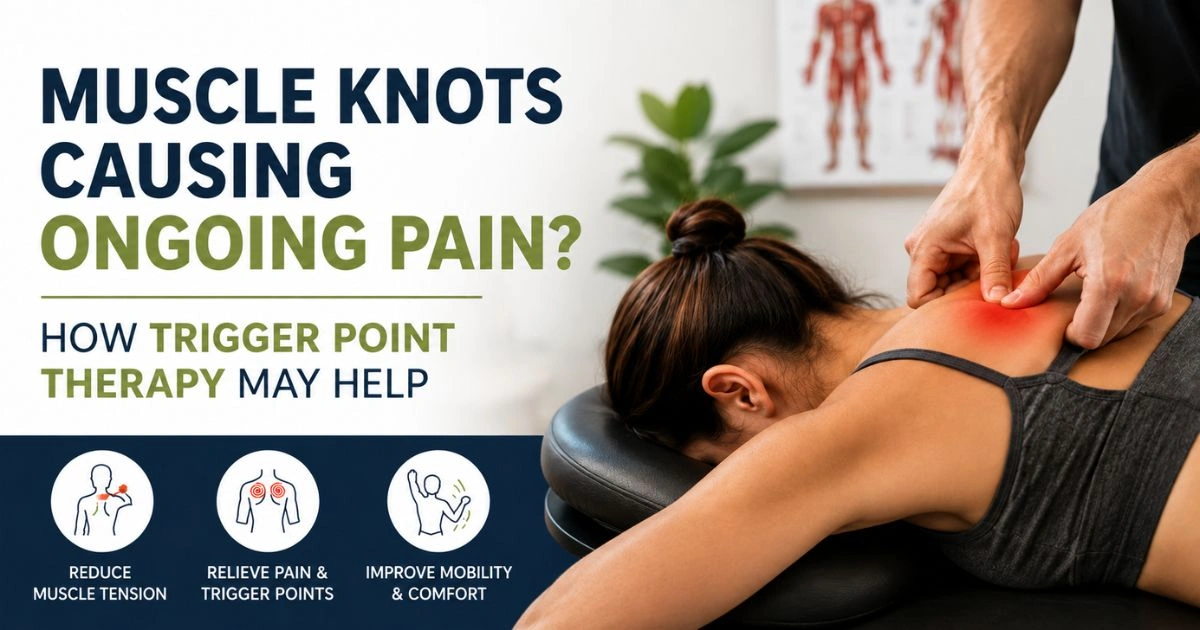
Muscle Knots Causing Ongoing Pain? How Trigger Point Therapy May Help

You might describe it as a “knot” in your shoulder, a tight spot in your back, or a tender area that seems to cause pain well beyond the place you can actually feel it. These stubborn areas can be frustrating, particularly when stretching, resting, or changing position only provides temporary relief.
Trigger Point Therapy is one approach that may help address sensitive, tight areas within muscles and surrounding soft tissue. It is commonly used as part of remedial massage treatment for people experiencing muscle tension, restricted movement and ongoing musculoskeletal discomfort.
If persistent muscle knots are affecting your work, exercise or everyday comfort, understanding what may be causing them is a useful first step.

What are muscle knots and trigger points?

A “muscle knot” is a common term used to describe an area of muscle that feels tight, tender or unusually sensitive. In clinical settings, these areas may be associated with myofascial trigger points — sensitive spots in muscles or connective tissue that can be painful when pressed.
Some trigger points cause discomfort directly where they are located. Others may be associated with referred pain, meaning you feel discomfort somewhere else.
For example, a sensitive area around the shoulder or upper back may be associated with pain that spreads towards the neck or head.
Common signs people notice include:
  • A small, tight or tender area within a muscle
  • Pain when pressure is applied
  • Aching or tightness that keeps returning
  • Reduced flexibility or range of motion
  • Discomfort that spreads into another area
  • Muscle soreness that seems disproportionate to recent activity
Not every painful lump or tight area is a trigger point, however. Ongoing or unexplained pain should be properly assessed rather than assumed to be a simple muscle knot.

Why do muscle knots keep coming back?

Muscle tension can develop for many different reasons. Often, there is more than one contributing factor.

Repetitive movements and overuse

Repeating the same movement during work, sport or exercise can place ongoing demands on certain muscles. This may contribute to local muscle fatigue and sensitivity, particularly when there is insufficient recovery.

Prolonged sitting or sustained positions

Spending long periods at a desk, driving or working in one position can leave some muscles working continuously while others become less active. This may contribute to stiffness and discomfort over time.

Exercise or sporting activity

Training harder than usual, returning to activity after a break, or changing your exercise routine can sometimes lead to muscle soreness and tightness. Sports involving repetitive movements may also contribute to recurring areas of tension.

Stress and muscle guarding

Stress can influence how much tension people hold in their bodies. Many people notice increased tightness around the jaw, neck, shoulders, or upper back during stressful periods.

Poor movement patterns or an underlying issue

Sometimes the painful area is not the whole story. Joint restriction, altered movement patterns, previous injuries, or other musculoskeletal problems may contribute to repeated muscle overload.
This is one reason an individual assessment can be valuable when pain keeps returning.

How can Trigger Point Therapy help?

Trigger Point Therapy involves applying targeted pressure and other manual techniques to sensitive areas within muscles and soft tissue. Depending on the person and the practitioner’s assessment, treatment may also include massage techniques, stretching and movement advice.
The aim is not simply to “break up” a knot. Muscles and connective tissue are more complex than that. Instead, treatment may help by addressing muscle sensitivity and tension while working towards improved movement and function.
Potential benefits may include:
  • Reduced feelings of muscle tightness
  • Temporary relief of local muscle pain
  • Improved comfort with movement
  • Improved range of motion in some people
  • Help with managing muscular tension alongside other treatment approaches.
At Chiropractix, remedial massage therapy may include techniques such as deep tissue massage, myofascial work and trigger point therapy, depending on your individual needs and assessment.

What happens during Trigger Point Therapy?

Treatment should begin with understanding your symptoms rather than immediately applying deep pressure to the sorest spot.
A qualified practitioner may ask about:
  • Where and when your pain started
  • Activities that aggravate or ease it
  • Previous injuries
  • Your work or training routine
  • Other symptoms you may be experiencing
They may then assess the affected area and surrounding movement.
During treatment, pressure may be applied to specific sensitive areas, with the intensity adjusted according to your comfort and tolerance. Trigger point work can feel uncomfortable at times, but treatment should not involve simply pushing through severe pain.
Your therapist may also use other techniques or recommend appropriate stretches and movement strategies.
At Chiropractix, the approach to care is personalized, with treatment options selected according to the individual and the nature of their problem.

Can you treat muscle knots yourself?

For mild muscle tightness, some simple self-care measures may be worth considering.

Gentle movement

Completely avoiding movement is not always necessary or helpful for uncomplicated muscle stiffness. Gentle walking and comfortable movement may help you avoid becoming increasingly stiff.

Take regular breaks

If your symptoms are associated with desk work or long periods in one position, changing position regularly can be useful.

Use gentle stretching

Light stretching may help some people feel more comfortable. Avoid forcing a stretch or pushing through sharp pain.

Consider heat or cold.

Some people find heat soothing for muscle tightness, while others prefer cold after recent activity or injury. The best option depends on the situation.

Look at the bigger picture.

If the same “knot” keeps returning, consider what might be contributing to it. Your workstation, training load, recovery, sleep, stress, and movement habits can all be relevant.
A massage gun or tennis ball may provide temporary relief for some people, but aggressive self-treatment can sometimes make an already irritated area more uncomfortable.

When should you seek professional help for muscle knots?

Professional assessment may be worthwhile if your pain:
  • Keeps returning despite self-care
  • Lasts for several weeks
  • Limits your work, sleep or exercise
  • Is becoming progressively worse
  • Significantly restricts movement
  • Follows an injury
  • Is accompanied by weakness, numbness or tingling
Depending on the cause of your symptoms, chiropractic care may also be relevant for assessing musculoskeletal factors affecting movement, joints and spinal function.
Some patients may benefit from a combination of approaches rather than relying on one treatment technique alone.

Could remedial massage be the right option?

If your ongoing pain appears to be related to muscular tension, overuse or soft tissue problems, remedial massage may be a suitable option to discuss with a qualified practitioner.
Chiropractix offers personalized remedial massage therapy in Brisbane and Milton, with treatment tailored to your symptoms and needs.
Techniques such as Trigger Point Therapy may be used alongside other approaches, including soft tissue work and stretching. Where appropriate, your practitioner may also provide advice about movement, recovery and managing contributing factors.
The goal should be to help you understand and manage the problem — not simply provide temporary relief without considering why it keeps coming back.

Are there other treatment options?

The best approach depends on what is contributing to your symptoms.
For some people, a broader treatment plan may include manual therapy, rehabilitation exercises or other forms of care. Chiropractix also provides acupuncture in Brisbane, which may be considered where appropriate following an individual assessment.
A healthcare professional can help determine which options are suitable for your particular symptoms and circumstances.

When is a muscle knot a sign of something more serious?

Most muscle tightness is not caused by a serious condition, but it is important not to self-diagnose persistent or unusual symptoms.
Seek appropriate medical attention promptly if you experience severe or unexplained pain, significant weakness, loss of sensation, major swelling, fever, unexplained weight loss, or symptoms following a serious accident or injury.
A proper assessment is especially important when your symptoms do not behave like typical muscle soreness.

Frequently Asked Questions

What is Trigger Point Therapy?

Trigger Point Therapy is a hands-on treatment approach that targets sensitive areas in muscles and soft tissue. It may involve sustained pressure and other manual techniques to help manage muscle tension, discomfort, and restricted movement.

Does Trigger Point Therapy hurt?

Treatment can sometimes feel uncomfortable, particularly when a sensitive area is being treated. However, severe pain should not simply be tolerated. Your practitioner should adjust the pressure according to your comfort and response.

How many Trigger Point Therapy sessions will I need?

There is no single answer. The number of sessions depends on factors such as the cause of your symptoms, how long the problem has been present, and how your body responds to treatment.

Can Trigger Point Therapy help neck and shoulder pain?

It may help when muscular tension or sensitive soft tissue is contributing to symptoms. However, neck and shoulder pain can have many causes, so an assessment is important.

Why does the same muscle knot keep returning?

Recurring symptoms may be linked to repetitive activity, prolonged positions, training load, stress, movement patterns or an underlying musculoskeletal issue. Addressing contributing factors can be just as important as treating the painful area itself.

Get Help for Ongoing Muscle Pain in Brisbane and Milton

A persistent muscle knot can be more than a minor annoyance when it affects your sleep, work, training or ability to move comfortably.
If you are dealing with ongoing muscle tension or recurring soft tissue pain, the team at Chiropractix in Milton can provide a personalized assessment and discuss whether Trigger Point Therapy, remedial massage or another treatment approach may be appropriate for you.
Rather than continuing to chase temporary relief, getting professional guidance may help you better understand what is contributing to your symptoms and what your next steps could be.
Book an appointment with Chiropractix in Milton, Brisbane, to discuss your individual needs and treatment options.
Best Sports Massage in Brisbane: Benefits, Costs & What to Expect

Whether you’re training for a marathon, playing weekend footy, hitting the gym regularly or dealing with persistent muscle soreness, finding the Best Sports Massage in Brisbane & Milton can make a real difference to how you feel and move.
Sports massage isn’t only for elite athletes. Many active people use it to help manage muscle tightness, support recovery and address areas that feel stiff or overloaded after exercise. The key is understanding what sports massage can realistically help with, what happens during an appointment and when another type of assessment may be more appropriate.
At Chiropractix in Milton, massage treatment is tailored to the individual rather than following a one-size-fits-all approach.

What Is Sports Massage?

Sports massage is a form of therapeutic massage designed to address muscles and soft tissues affected by physical activity, training, or repetitive movement.
Depending on your needs, a session may involve techniques such as:
  • Deep tissue massage
  • Trigger point therapy
  • Myofascial techniques
  • Muscle stretching
  • Targeted soft tissue work
The intensity and approach should depend on your symptoms, training and comfort level. A good sports massage does not simply mean applying as much pressure as possible.
At Chiropractix, sports and remedial massage may be used to address muscle tension, sporting injuries and mobility concerns, with treatment tailored to the individual.

What Are the Benefits of Sports Massage?

Sports massage may be useful when muscles feel tight, sore or overworked. Depending on the individual and the underlying problem, potential benefits may include:

Reduced muscle tension

Hard training, repetitive movements and prolonged sitting can all contribute to muscle tightness. Targeted massage may help reduce the feeling of tension in affected soft tissues.

Improved mobility

When muscle tightness is contributing to restricted movement, treatment may help you move more comfortably and improve your range of motion.

Support for recovery

After demanding training or competition, many people experience delayed soreness and general muscle fatigue. Sports massage may form part of a broader recovery routine alongside appropriate rest, nutrition and training management.

Help with recurring tight areas.

Some people repeatedly experience tight calves, hamstrings, shoulders, hips or upper-back muscles. A therapist can assess the area and provide targeted treatment, while also discussing factors that may be contributing to the problem.

A more personalized approach to active lifestyles

Your needs will differ depending on whether you’re a runner, cyclist, gym-goer, tradie or recreational athlete. A personalized assessment can help determine which areas require attention and whether massage is appropriate.

Who Can Benefit From Sports Massage?

You don’t need to be a professional athlete to consider sports massage.
People commonly seek sports or remedial massage for:
  • Post-training muscle soreness
  • Tight hamstrings or calves
  • Shoulder and upper-back tension
  • Hip and glute tightness
  • Neck discomfort related to exercise or posture
  • General muscle stiffness
  • Sports-related soft tissue problems
  • Recovery support during periods of heavy training
If you’re looking for the Best Sports Massage in Brisbane & Milton, it is worth choosing a practitioner who considers your symptoms, activity level and individual goals rather than simply offering a standard massage routine.
Chiropractix provides targeted remedial massage therapy in Milton, including sports and deep tissue massage techniques where appropriate.

What Happens During a Sports Massage Appointment?

If it is your first appointment, the therapist will usually begin by discussing your main concern.
You may be asked about:
  • Where you feel pain or tightness
  • When the problem started
  • Your training or exercise routine
  • Previous injuries
  • Movements that aggravate your symptoms
  • Your general health and relevant medical history
The affected area may then be assessed before treatment begins.
During the massage, your therapist may use different levels of pressure and techniques depending on your needs. You should be comfortable communicating if the pressure is too strong or uncomfortable.
At Chiropractix, patients are assessed before treatment, and therapists may also provide stretching or home-care recommendations where appropriate.

Should Sports Massage Hurt?

Not necessarily.
Some deeper massage techniques can feel intense, particularly when working around tight or sensitive muscles. However, more pain does not automatically mean better treatment.
You should not feel that you simply have to tolerate excessive discomfort. Let your therapist know if the pressure feels too strong. Treatment can usually be adjusted according to your comfort and the area being treated.
Some people experience temporary tenderness after a deeper massage. This generally settles over the following days, although the response varies from person to person.

How Much Does Sports Massage Cost in Brisbane?

Sports massage prices vary depending on the clinic, therapist and appointment length.
At Chiropractix, current listed massage fees effective from 1 July 2026 are:
  • 30 minutes: $75
  • 45 minutes: $95
  • 60 minutes: $115
  • 90 minutes: $160
  • 120 minutes: $200
These appointments include remedial, sports, relaxation, and pregnancy massage options, depending on your needs and booking.
For some people, a shorter appointment may be suitable for one specific area. Others with multiple areas of concern may benefit from a longer consultation. Your therapist can help you decide what is appropriate for your situation.

Sports Massage or Remedial Massage: What’s the Difference?

There is often considerable overlap between sports and remedial massage.
Sports massage generally focuses on the physical demands of exercise, training and sporting activity.
Remedial massage takes a broader therapeutic approach to assessing and treating soft tissue concerns that may be contributing to pain, stiffness or reduced movement.
In practice, your treatment may include elements of both approaches. The most appropriate option depends on your symptoms and goals.
If you’re dealing with persistent muscle pain, stiffness or a sports-related concern, remedial massage therapy at Chiropractix may be a relevant starting point.

When Should You Seek Professional Assessment?

Massage may be helpful for many muscle-related concerns, but it isn’t appropriate for every problem.
Consider professional assessment if you have:
  • Severe or worsening pain
  • Significant swelling or bruising after an injury
  • Difficulty bearing weight
  • Sudden weakness
  • Persistent symptoms that aren’t improving
  • Pain following significant trauma
  • Numbness or tingling that continues or worsens
These symptoms can sometimes indicate something that requires a different type of medical assessment.
If your problem appears to involve joints, spinal movement or broader musculoskeletal function, a Brisbane chiropractor may also be able to assess whether chiropractic care is relevant to your situation.

Can Sports Massage Be Combined With Other Treatments?

In some situations, massage may form part of a broader treatment plan.
Depending on your individual needs, Chiropractix offers chiropractic care, remedial massage and acupuncture, allowing different approaches to be considered where clinically appropriate.
For example, some patients may benefit from combining soft tissue treatment with movement advice, rehabilitation exercises or other care recommended after an assessment.
Acupuncture in Brisbane may also be discussed as another treatment option depending on your individual presentation and practitioner assessment.
The important point is that treatment should be based on your specific problem rather than assuming every athlete or active person needs the same approach.

How Often Should You Have a Sports Massage?

There is no single schedule that suits everyone.
How often you need treatment can depend on:
  • Your training volume
  • The type of activity you perform
  • Whether you have an existing injury or ongoing symptoms
  • How your body responds to treatment
  • Your recovery and rehabilitation plan
Some people book massage around periods of intense training, while others only seek treatment when they develop a particular problem.
A qualified practitioner can discuss your goals and recommend an approach based on your circumstances. Regular appointments should have a clear purpose and be reviewed as your symptoms and needs change.

Simple Ways to Support Recovery Between Appointments

Sports massage works best as part of a sensible approach to training and recovery.
Depending on your circumstances, useful habits may include:
  • Gradually progressing your training load.
  • Allowing adequate recovery between demanding sessions
  • Maintaining appropriate hydration and nutrition
  • Performing exercises recommended by a qualified professional
  • Paying attention to persistent or worsening symptoms
  • Avoiding the temptation to train through significant pain
If you’re unsure whether soreness is normal or a sign of a developing injury, professional assessment can help you make a more informed decision.

Looking for Sports Massage in Brisbane or Milton?

If muscle soreness, tightness or a sports-related problem is affecting your training or everyday movement, getting the right assessment can help you understand your options.
At Chiropractix, our qualified massage therapists provide personalized sports and remedial massage in Brisbane and Milton, with treatment tailored to your individual needs and goals.
To discuss your concerns or book an appointment, contact Chiropractix at 16 Gordon Street, Milton, or call (07) 3369 0110.

FAQs

Is sports massage only for athletes?

  • No. Sports massage can also be suitable for recreational exercisers and physically active people dealing with muscle tightness, soreness or training-related stiffness.

How long should a sports massage appointment be?

  • It depends on the areas being treated and your individual needs. A 30-minute session may suit one targeted area, while 60 minutes or longer may be appropriate when several areas require attention.

Can I exercise after a sports massage?

  • This depends on the type and intensity of treatment and how your body feels afterward. Your therapist can provide guidance based on your training schedule and treatment.

Is sports massage covered by private health insurance?

  • Some patients may be eligible for rebates depending on their private health fund and level of cover. Chiropractix notes that rebates may apply for eligible remedial massage cover, so it is best to check your policy details.

What should I wear to a sports massage?

  • Wear comfortable clothing to your appointment. Your therapist will explain what needs to be exposed for treatment and use appropriate draping for privacy.

Is deep tissue massage always better for sports recovery?

  • No. More pressure is not necessarily better. The appropriate technique and intensity depend on your symptoms, the tissue being treated, and your comfort.

Remedial Massage Brisbane City for Desk Workers: Relieve Neck, Back & Shoulder Tension

Sitting at a desk for long hours can be hard on your body. When you sit for extended periods, use a computer repeatedly, and don’t move much, you may notice tight shoulders, a stiff neck, and discomfort in your upper and lower back.
For many office workers in Brisbane, the main issue isn’t just sitting. The real problem is staying in the same position for too long, especially when work keeps you at your computer for hours without a break.
Remedial Massage Brisbane City offers a way to manage muscle tension and help your body feel better after a long day at work. A skilled therapist will look for areas of tightness and adjust the treatment to fit your needs, instead of using a one-size-fits-all approach.

How Remedial Massage May Help Desk Workers

Remedial massage works on soft tissues like muscles, tendons, and nearby areas. The therapist may use targeted massage and other hands-on techniques to help with spots that feel tight, restricted, or sore.
For people who work at desks, this often means focusing on the neck, upper back, shoulders, lower back, and hips. Easing muscle tension can make moving around each day feel easier and works well alongside other habits like moving regularly, adjusting your workspace, and doing strengthening exercises.
Keep in mind that massage doesn’t fix every kind of pain. If your symptoms last, get worse, or come with other worrying signs, it’s best to see a healthcare professional to find out what’s going on.

Common Desk-Related Problems Massage Can Address

Neck and shoulder tension is very common for people who spend a lot of time looking at screens. Keeping your head in one spot and often reaching for your keyboard or mouse can make the muscles around your neck and shoulders feel tired and tight.
Sitting for long stretches can also cause lower back discomfort. Massage can help ease muscle tension, but for lasting results, it’s best to combine treatment with regular movement, the right exercises, and a good workplace setup.
Some people also notice headaches associated with tension around the neck and shoulders. A remedial massage therapist can work with the soft tissues contributing to muscular tightness, while recognising that headaches can have many different causes and may require medical assessment when appropriate.

What to Expect From Remedial Massage in Brisbane City

A good remedial massage session starts with a chat about your symptoms, daily routine, any past injuries, and what you hope to achieve. This helps the therapist understand your discomfort and pick the right techniques for you.
During your treatment, the therapist might focus on certain areas instead of giving a full-body massage. They can adjust the pressure and techniques based on your comfort, how your muscles feel, and the goals you talked about earlier.
After your massage, you might feel more relaxed or find it easier to move. Your therapist may also give you simple tips, like taking regular breaks to move around or adding some helpful exercises, to keep you feeling better between visits.

Massage Works Best Alongside Better Desk Habits

Remedial massage can help, but it shouldn’t be your only way to handle tension from desk work. Even the best treatment plan won’t work well if you keep sitting for hours without a break every day.
Small changes can really help. Try standing up often, walking between tasks, changing how you sit, and taking short breaks from your screen to avoid staying in one position for too long.
It’s also important to look at your workstation. A comfortable chair, the right screen height, and good keyboard and mouse placement can make work easier on your body. If you still have pain after making these changes, it’s a good idea to get professional advice.

Choosing Remedial Massage Brisbane City for Ongoing Tension

When picking a massage provider, don’t just go for the nearest clinic. Think about whether the therapist listens to your concerns and offers care that’s tailored to you, instead of treating everyone the same.
At Chiropractix, remedial massage is part of a broader approach to musculoskeletal care. The clinic provides personalized treatment tailored to individual needs, with services including remedial massage, chiropractic care, acupuncture, manual therapy, dry needling, and rehabilitation exercises.
If you are looking for the best remedial massage in Brisbane, Chiropractix provides remedial massage in Brisbane and Milton with experienced therapists focused on personalized care and pain management.

When Should You Consider Professional Assessment?

If you feel muscle tightness after a long day at your desk, it might get better with some movement, rest, and self-care. But if the pain keeps coming back, don’t ignore it or just treat it over and over without finding out the cause.
See a professional if your symptoms last, make daily life hard, get worse, or keep coming back. If you notice things like unexplained weakness, numbness, a lot of swelling, or pain after a serious injury, you should get checked by a doctor.
The best treatment is different for everyone. A qualified healthcare professional can help you decide if remedial massage is right for you or if you need another type of care.

Conclusion

Spending long hours at a desk can lead to tension in your neck, back, and shoulders, especially if you don’t move much or pay attention to your posture. Remedial Massage Brisbane City can help manage muscle tightness and make movement easier when the treatment is tailored to you.
For the best results, use massage along with regular movement, good workplace habits, and the right exercises. If you still feel discomfort and want to talk about your options, reach out to Chiropractix to discuss personalised care in Brisbane and Milton.

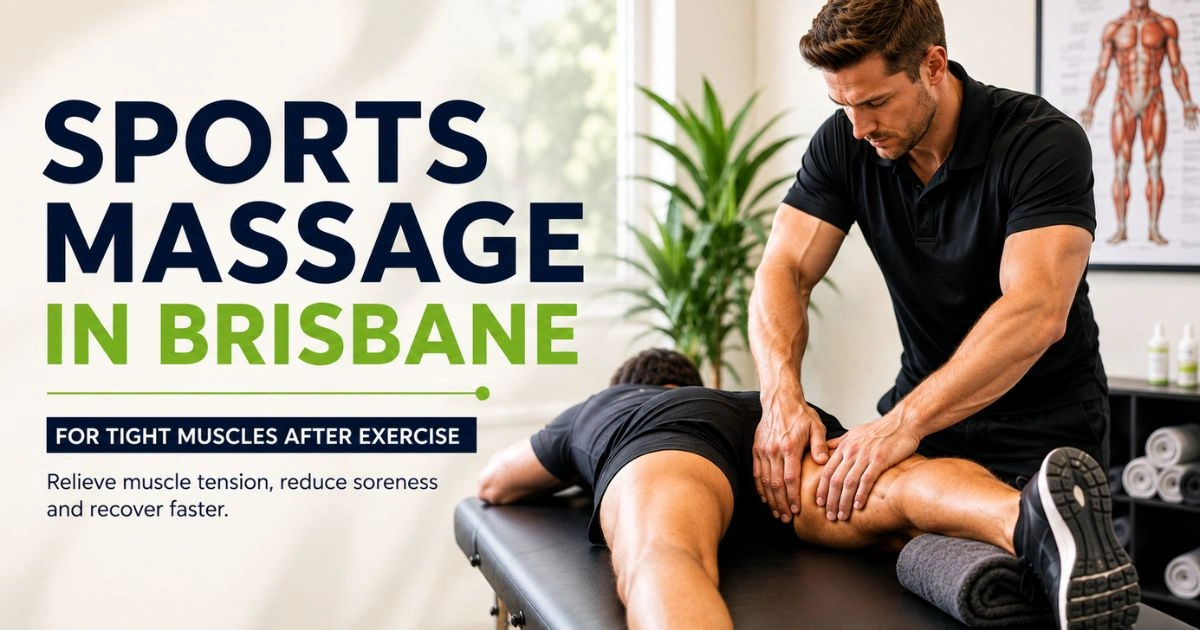
Sports Massage in Brisbane for Tight Muscles After Exercise

If your muscles feel tight, heavy, or sore after a workout, you are not alone. Hard training, new exercises, running, gym sessions, and repeating the same movements can all make your muscles feel uncomfortable, especially if your body has not had enough time to recover.
Sports massage in Brisbane is one way to manage muscle tension after exercise and support your recovery. At Chiropractix in Milton, massage treatments are tailored to each person instead of using the same method for everyone.
If you are active in Brisbane, the goal is not just to push through soreness. Knowing why your muscles get tight and picking the right recovery strategies can help you get back to your usual activities feeling more comfortable and confident.

Why Do Muscles Become Tight After Exercise?

There are several reasons why muscles feel tight after exercise. Tough workouts put stress on your muscles and connective tissues, and doing the same movements over and over can cause temporary stiffness and soreness. You might also get delayed onset muscle soreness, or DOMS, after trying new or intense exercises.
You might notice tightness after increasing your training, trying a new activity, or getting back to exercise after a break. Runners, gym-goers, and recreational athletes can all feel this kind of discomfort after working out.
Tight muscles can make it harder to move comfortably. If stiffness changes how you move or keeps coming back after training, it might be time to look at your exercise routine, recovery habits, or any underlying issues.

How Can Sports Massage Help Tight Muscles?

Many people who exercise regularly use sports massage as part of their recovery. Research shows that massage may help reduce the soreness you feel with DOMS after hard exercise, but its effects on performance and recovery can be different for everyone.
A massage therapist can focus on areas that feel especially tense, using the right soft-tissue techniques for your needs and goals. The treatment is not just about using a lot of pressure. Comfort, tolerance, and the cause of the tightness are all important.
At Chiropractix, the massage team offers remedial and sports massage, using soft-tissue techniques tailored to each person. The clinic is in Milton and helps people with sports injuries, muscle tension, and other musculoskeletal issues.

When Should You Consider a Sports Massage?

There is no perfect schedule for sports massage. Some people get a massage after tough training sessions, while others use it regularly to help with ongoing muscle tension and to keep moving well.
If your muscles often feel tight after exercise, try to look beyond just the soreness. Things like how much you train, your recovery time, sleep, hydration, exercise technique, and sudden changes in activity can all affect how your body feels.
It’s also important to know when soreness could be more than normal post-workout discomfort. If you have sharp pain, a lot of swelling, weakness, trouble moving, or symptoms that don’t go away or get worse, you should see a healthcare professional instead of just getting a massage.

Sports Massage and Your Brisbane Exercise Routine

A good recovery routine does not have to be complicated. Getting enough rest, slowly increasing your training, warming up properly, and making sure you eat and drink well all help your body handle exercise. Massage can support these habits, but it should not replace them.
For Brisbane runners, gym members, cyclists, and recreational athletes, getting a treatment plan that fits you can help when tightness keeps affecting your movement or training. It’s important to understand your needs and pick the right approach.
If you have muscle tightness along with ongoing back or joint discomfort, it may be helpful to get a full assessment. A qualified chiropractor in Brisbane can check for musculoskeletal issues and help you decide if chiropractic care, massage, exercise, or another treatment is best for you.

Choosing Sports Massage in Brisbane

When picking a sports massage provider, choose someone qualified who takes time to understand your activity level, symptoms, and goals. A good session should be more than just working on tight muscles—it should also look at why they became tight.
Chiropractix offers sports and remedial massage in Milton, Brisbane, as part of a clinic that also provides chiropractic care and acupuncture. The clinic says its practitioners use personalized treatment plans and evidence-based techniques.
If you are thinking about sports massage in Brisbane for muscle tightness after exercise, the best treatment will depend on your situation. You can contact Chiropractix to talk about your needs and book an appointment.

Conclusion

Tight muscles after exercise are common, especially when you change how hard or how often you train. Sports massage in Brisbane may help reduce muscle soreness and can be a helpful part of your recovery routine, but it is not a replacement for getting checked if your symptoms last or are worrying.
At Chiropractix in Milton, sports and remedial massage can be adjusted to fit your activity level and personal needs. With the right mix of recovery, exercise planning, and professional advice, you can move more comfortably and stay active.

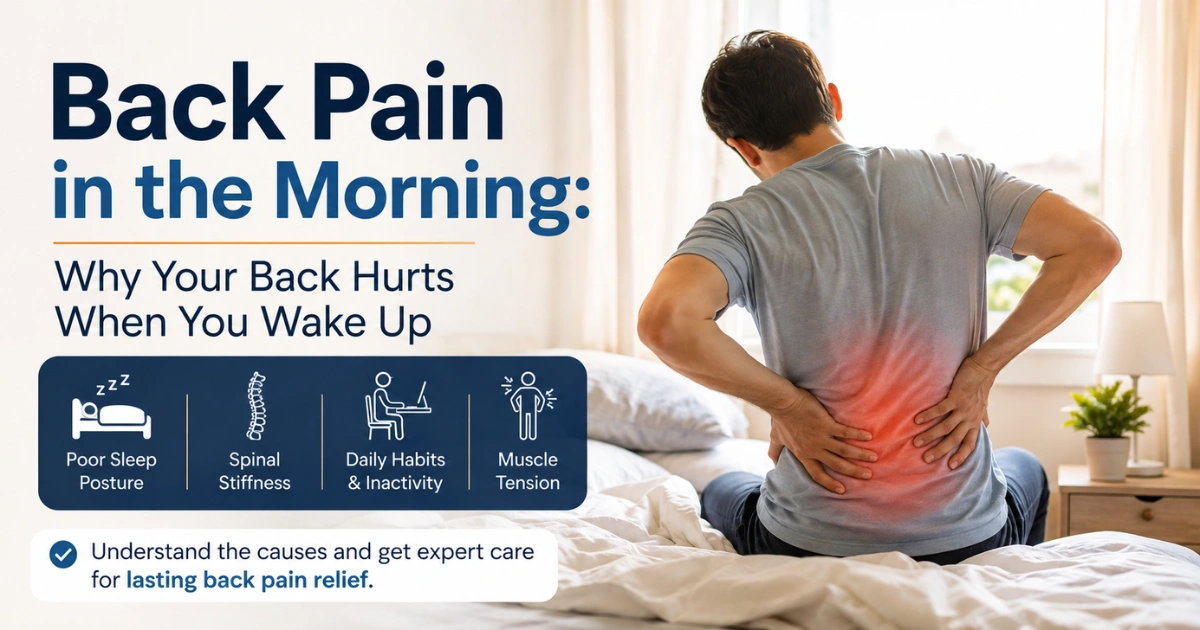
Back Pain in the Morning: Why Your Back Hurts When You Wake Up

Waking up with back pain can make your morning frustrating, especially if you feel stiff, sore, or slow to get moving. While it’s normal to feel discomfort from time to time, regular pain after sleeping might mean something in your routine, sleep position, or movement habits needs a closer look.
The good news is that morning back pain does not always mean there is damage to your spine. Most lower back pain is not caused by a serious condition and often gets better with the right movement and self-care.
If you often wake up with a stiff or sore lower back, figuring out what might be causing it can help you choose your next steps.

Why Does Your Back Hurt When You Wake Up?

A common reason for back pain in the morning is staying in one position for hours while you sleep. Since you move less at night, the muscles and joints around your spine can feel stiff when you get up. This usually gets better once you start walking and moving around.
The way you sleep can also affect how your back feels in the morning. For some people, sleeping on their stomach puts the spine in an awkward position, while sleeping on your side or back might feel better depending on your body and symptoms.
Your mattress and pillow can also make a difference, but there isn’t one type that works for everyone. If your pain shows up after sleeping and gets better once you’re moving, it’s a good idea to look at your sleep setup as well as your daily habits.

Could Your Daily Routine Be Causing Morning Back Pain?

Morning back pain isn’t always caused by what happens while you sleep. Sitting for long periods, not moving much, repetitive tasks, lifting, or staying in one position during the day can all add up and make your back feel worse after resting.
For many Brisbane office workers and commuters, a typical day means hours at a desk, driving, or sitting on public transport, then more sitting at home. Moving regularly during the day helps keep your back flexible and can reduce stiffness from being inactive.
Gentle movement in the morning can help. Instead of staying in bed when your back feels sore, try getting up slowly and walking around for a few minutes. Healthdirect suggests staying as active as you can for most types of back pain, instead of resting in bed for long periods.

What Can You Do About Back Pain in the Morning?

Give yourself a bit of time to move before asking too much of your back. Get out of bed slowly, walk around the house, and try some gentle mobility exercises to help your body adjust from resting to your usual activities.
It also helps to look at what you do during the rest of your day. Regular walking, strength exercises, and changing positions at work all support back health. Exercise and self-care are important parts of managing low back pain.
If your morning pain keeps coming back, seeing a professional can help find out what’s causing it, instead of just treating the pain each day. A personalized plan might include advice on movement, exercise, and hands-on care tailored to you.

When Should You Get Your Back Pain Checked?

It’s normal to feel stiff some mornings, but if your pain sticks around or gets worse, it’s important to pay attention. Talk to a healthcare professional if your back pain lasts for several weeks, affects your sleep or daily life, or keeps getting harder to manage.
Get medical help right away if your back pain comes with serious weakness or numbness, loss of bladder or bowel control, numbness around your groin, fever, unexplained weight loss, or happens after a serious accident. These signs could mean you need urgent medical attention.
If you’re not sure whether your symptoms need professional attention, it’s better to get them checked than to ignore them. If you’re looking for a chiropractor in Brisbane, Chiropractix in Milton offers personalized care, manual therapy, rehab exercises, and other treatments tailored to your needs.

How Chiropractix Can Help With Morning Back Pain

At Chiropractix, we focus on understanding your symptoms and how they affect your daily life, instead of assuming all back pain has the same cause. Your assessment helps us find movement issues and other factors that might be causing your discomfort.
Depending on your needs, your care might include manual therapy, exercise-based rehab, and practical advice to help you move better and recover. Guidelines recommend using manual therapy as part of a broader plan that also includes exercise, rather than on its own.
If you wake up with back pain often, you don’t have to just accept it as part of aging or a busy life. Learning about the causes and getting the right advice can help you move more comfortably and confidently each day.

Conclusion

Morning back pain can be caused by long periods of inactivity, your sleeping position, daily habits, muscle and joint stiffness, or other personal factors. While it’s normal to feel discomfort sometimes, ongoing or worsening symptoms should be checked by a healthcare professional.
If you live in Brisbane and have ongoing morning back pain, getting a personalized assessment can help you understand your symptoms and improve your movement. Chiropractix in Milton offers care tailored to help with pain, mobility, and long-term musculoskeletal health.

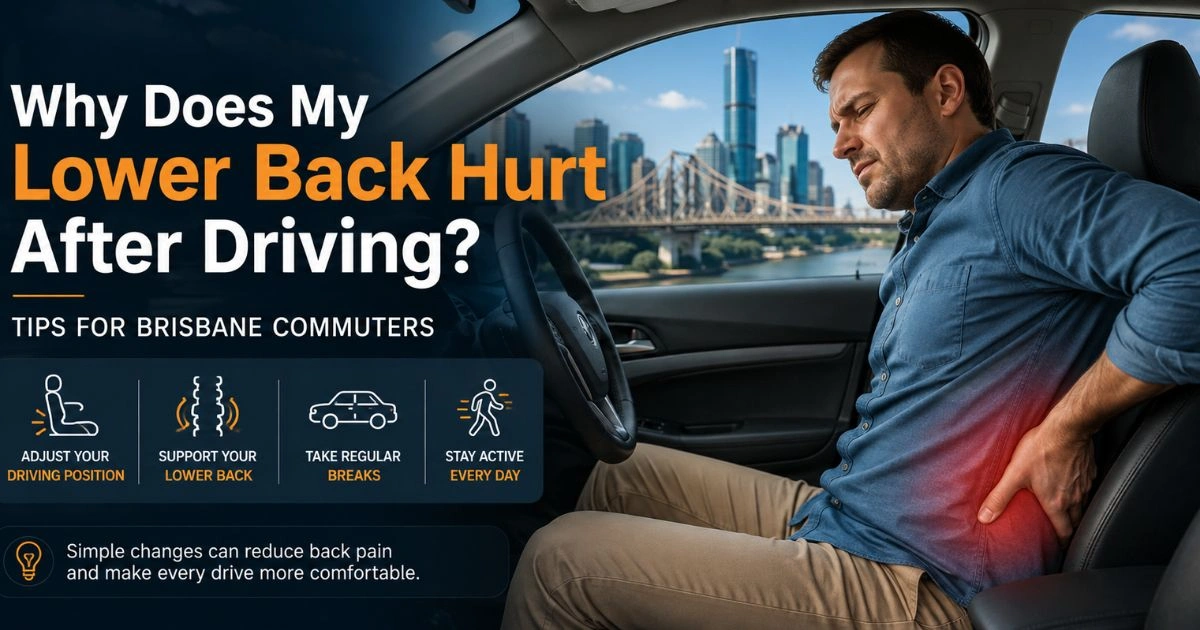
Why Does My Lower Back Hurt After Driving? Tips for Brisbane Commuters

If you often drive in Brisbane, you might notice a familiar problem. You begin your trip feeling fine, but by the time you arrive, your lower back feels stiff, sore, or painful. This tends to happen more after long drives or spending hours behind the wheel.
There are several reasons you might get lower back pain after a long drive. These include sitting for too long, not having enough support in your seat, muscle fatigue, and not moving enough. The good news is that making a few simple changes to your driving setup and daily habits can help ease the strain on your back.

Why Can Driving Cause Lower Back Pain?

When you drive, you stay seated for a long time. Unlike sitting at home, you have to keep your legs near the pedals and your hands on the steering wheel, so you can’t move around as much.
Sitting for a long time can make your lower back feel stiff and uncomfortable. Healthdirect says that sitting too long and having poor posture can make non-specific low back pain more likely.
How you sit in the car also matters. If your seat is too far from the pedals, too reclined, or doesn’t support your lower back, you might end up reaching forward or slouching. On a long Brisbane commute, these small issues can become much more noticeable.

Your Driving Position Could Be Part of the Problem

Before you start driving, take a moment to adjust your seat, steering wheel, and mirrors. Make sure you can reach the pedals comfortably without stretching your legs, and that your back feels supported.
Try not to slouch in your seat. You also don’t need to sit perfectly straight the whole time. Aim for a comfortable, supported position that lets you drive safely without reaching or twisting too much.
If your car has lumbar support, adjust it so it fits the natural curve of your lower back. Healthdirect also suggests keeping good posture in the car and using back support if you need it.

Why Long Brisbane Drives Can Make It Worse

A short drive might not cause any problems, but sitting for longer can make back discomfort worse. Brisbane commuters often spend a lot of time traveling between suburbs, especially during busy peak-hour traffic, when you can’t move around much.
Driving long distances also means you have fewer chances to change your position. When you’re focused on traffic, it’s easy to stay in the same posture without noticing how long you’ve been sitting.
If you’re planning a long trip, try to schedule regular stops so you can get out of the car and move around. Healthdirect recommends taking breaks on long drives to get up and stretch your back.

Simple Ways to Reduce Lower Back Pain While Driving

One easy change is to stop thinking of your car seat as something you can’t adjust. Before you start driving, move the seat and steering wheel to make sure your lower back feels supported, not strained.
On longer trips, take regular breaks and walk around for a few minutes. After parking safely, gentle movement can help you avoid sitting in one position for too long. Staying active outside the car is also important, since regular movement and exercise can help manage non-specific low back pain.
It’s also important to think about your whole day. If you sit a lot at work and then sit more during your commute, your back is getting very little movement. Try to break up long periods of sitting throughout the day to help manage back discomfort.

When Should You Get Your Back Pain Checked?

Feeling stiff after a long drive doesn’t always mean something serious is wrong. But if your pain keeps coming back, gets worse, affects your daily life, or doesn’t get better, it’s a good idea to talk to a healthcare professional.
Watch out for other symptoms too. If you have pain that goes down your leg, numbness, tingling, or weakness, you may need further assessment, especially if these symptoms don’t go away.
Get medical help right away if your back pain happens after a serious accident or injury, or if you have severe symptoms like losing control of your bladder or bowels, or major leg weakness or numbness. These are not just normal driving-related stiffness.

How Can Lower Back Pain Treatment Help?

If driving often causes your symptoms, getting an assessment can help find out what’s contributing to the problem. Depending on your needs, treatment might include hands-on care, movement advice, rehab exercises, or other helpful approaches.
At Chiropractix in Milton, Brisbane, treatment is tailored to each person instead of using a one-size-fits-all approach. Chiropractic care can be combined with manual therapy, rehab exercises, dry needling, or other services as needed.
If you’re looking for lower back pain treatment in Brisbane, start by finding out what might be causing your symptoms and choosing care that fits your needs.

Conclusion

Lower back pain after long drives is often caused by sitting too long, not moving enough, or having an uncomfortable seat position. Simple changes like adjusting your seat, supporting your lower back, and taking regular breaks can make long trips more comfortable.
If your back pain keeps coming back or starts to affect your daily life, don’t just accept it as part of commuting. If you’re looking for lower back pain treatment in Brisbane, a professional assessment can help you find the best next step and get you moving comfortably again.

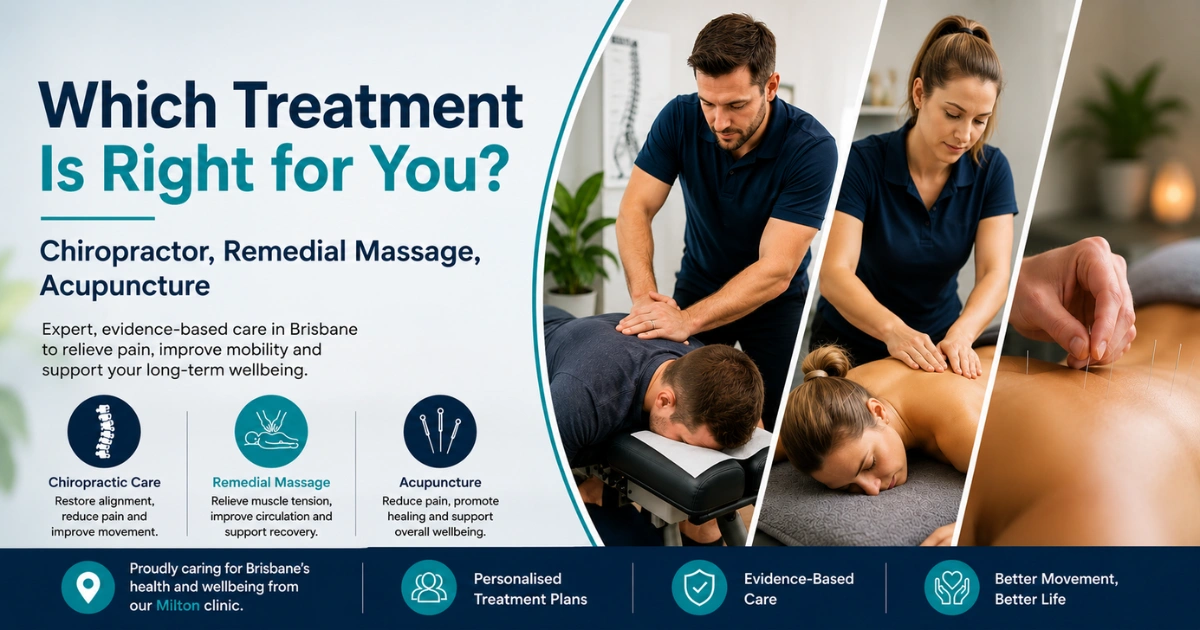
Which Treatment Is Right for You? Chiropractor, Remedial Massage, Acupuncture

Choosing the right treatment for pain or limited movement can be confusing, especially when different healthcare options appear to offer similar results. If you’ve searched for a Chiropractor Near Me, you likely want a solution that gets to the root of your discomfort instead of just covering up the symptoms.
At Chiropractix in Brisbane, each patient gets care tailored to their needs. Whether you have back pain, neck stiffness, sports injuries, headaches, or muscle tension, a mix of chiropractic care, remedial massage, and acupuncture can help you recover and feel better in the long run.

Why Searching for a Chiropractor Near Me Is a Great First Step

Many people start by searching for a Chiropractor Near Me when ongoing pain starts to affect their daily life. Chiropractic care aims to improve how your spine and joints move, support your nervous system, and help you move better, using proven hands-on techniques that fit your needs.
Many people assume chiropractors only treat back pain, but modern chiropractic care can help manage a wide range of musculoskeletal conditions. Neck pain, headaches, postural strain, sporting injuries, and workplace discomfort are all common reasons patients visit a chiropractor.
At Chiropractix, every consultation begins with a detailed assessment to understand the underlying cause of your symptoms. Rather than offering a one-size-fits-all solution, treatment plans are personalized to match your health goals, lifestyle, and recovery needs.
If you’re searching for a Chiropractor Near Me in Brisbane, getting checked early and starting the right treatment can help you move better, feel less pain, and support your health over time.

When Remedial Massage Therapy May Be the Better Option

Sometimes pain comes more from tight muscles than from joint problems. Remedial massage therapy focuses on muscles, tendons, ligaments, and tissues that get tight from injury, repeating the same movements, or sitting too long.
Many Brisbane office workers experience muscle tension caused by poor posture, long hours at a desk, or repetitive workplace tasks. Remedial massage can reduce muscle tightness, improve circulation, and restore flexibility while supporting the body’s natural healing process.
Sports enthusiasts also benefit from remedial massage before and after physical activity. Regular treatment may help minimize muscle soreness, improve recovery times, and reduce the likelihood of future injuries.
At Chiropractix, remedial massage is often part of your overall treatment plan. Relaxed muscles can make chiropractic adjustments and rehab exercises work better.

How Acupuncture Complements Chiropractic Care

Acupuncture is now a popular choice for people who want natural pain relief without just using medication. Research shows acupuncture may help with pain, relax tight muscles, improve blood flow, and support your body’s healing.
People with ongoing neck pain, lower back pain, headaches, muscle tension from stress, or sports injuries often find acupuncture helpful along with other treatments. Each session is planned to fit your symptoms and health history.
At Chiropractix, acupuncture is added to your care plan when it’s the right choice for you. By combining acupuncture, chiropractic care, and remedial massage, we can treat pain in different ways instead of just focusing on one spot.
This combined approach often helps people feel more comfortable as they recover and supports better movement and function over time.

Choosing the Right Treatment for Your Condition

The best treatment depends on the source of your symptoms rather than simply where the pain is located. Joint restrictions, muscle tightness, inflammation, posture, lifestyle, and previous injuries all play important roles in determining the most appropriate care.
Someone experiencing persistent lower back pain may benefit primarily from chiropractic adjustments, while another patient with significant muscle tension could achieve better outcomes through remedial massage. Others may require a combination of chiropractic care, acupuncture, and rehabilitation exercises to achieve lasting improvement.
An experienced healthcare practitioner will assess movement, posture, muscle function, and medical history before recommending treatment. This personalized approach ensures care is both safe and effective.
If you’re unsure where to begin, scheduling an assessment with an experienced chiropractor is often the best starting point. The findings will help determine whether chiropractic care alone or a combination of therapies is most suitable.

Why Brisbane Patients Choose Chiropractix

Chiropractix is trusted by many people in Brisbane because we focus on care that brings long-term results, not just quick fixes. Each treatment plan is made to fit your needs, health goals, and lifestyle.
Our clinic brings together chiropractic care, remedial massage, acupuncture, dry needling, rehab exercises, and practical advice to help you recover. This way, you get all your care in one place.
We also believe education is key. When you understand why pain happens and learn how to prevent it, you can take charge of your health.
If you’re looking for a Chiropractor Near Me in Brisbane, Chiropractix offers expert care to help ease pain, improve how you move, and support your long-term health with personalized, proven treatments.

Conclusion

It doesn’t have to be hard to choose between chiropractic care, remedial massage, and acupuncture. Each one has its own benefits, and often, the best results come from using a mix of treatments that target both the pain and what’s causing it.
If you have back pain, neck stiffness, headaches, sports injuries, or muscle tension that won’t go away, a professional check-up can help you find the right treatment. If you’re searching for a Chiropractor Near Me in Brisbane, Chiropractix provides care that’s tailored to you, proven to work, and focused on helping you move better and get back to what you love.